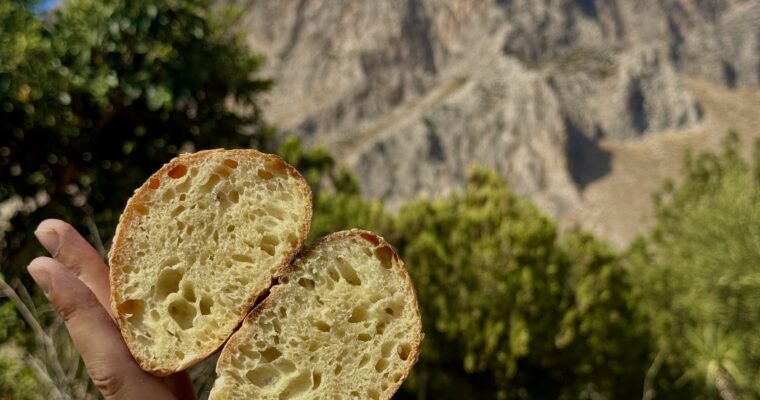
My inner bread nerd had always dreamed of baking in a wood-fired brick oven, something you don’t commonly find in bakeries nowadays. So when I received an invitation from Jana Balážová and Andrea to co-host a sourdough baking workshop in Sicily, I enthusiastically agreed. The …
When I was visiting Portugal and Lisbon in 2024, I visited a very small bakery with a coffee shop where they also served breakfast. I had a lovely chat with the owner, who told me that they were baking sourdough and told me a bit …
I gave myself a few weeks of inner reflections to think if I should attend Embodied Nature, a workshop with Frida Kim and Wagner Kreusch at Domaine de Boisbuchet, and to set my goals. However, last week I found myself in the middle of French nowhere, surrounded by people from all over the world who came here for three different workshops.
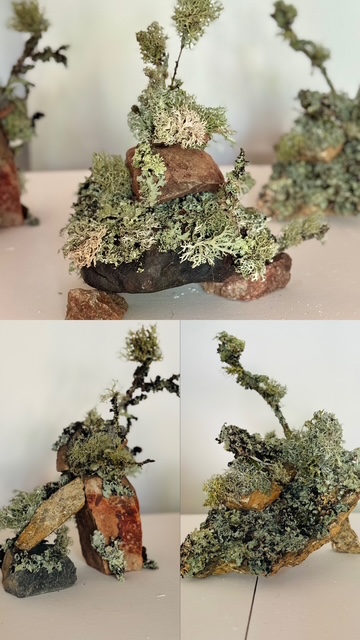
I came to create a bigger hanging installation but somehow ended up making three smaller pieces. No regrets, though, because the amount of feedback I received from both Wagner and Frida provided me with a huge amount of insights about floristry and art in general.
Not sure what I will do with all this new knowledge now, except buying a book on Sogetsu ikebana. But I will figure it out with time. For now, I will just let the impressions sit for a bit.
Also, my own concerns about being a 40-year-old male participant with no floristic background were probably a bit exaggerated. The crowd was very diverse, and my inner introvert was even making friends.
And somehow, of course, bread found its way into this experience too.
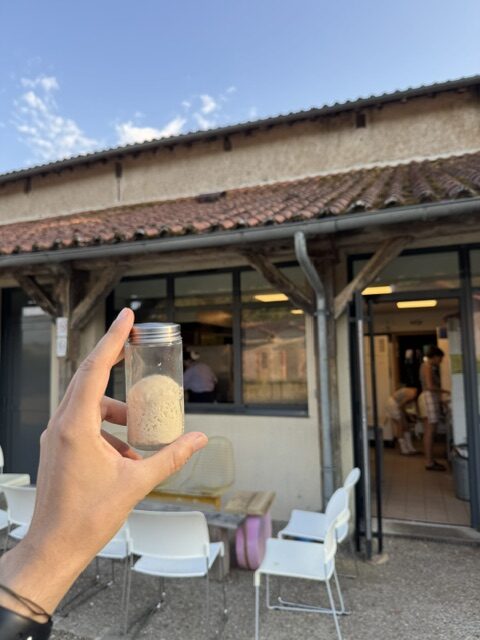
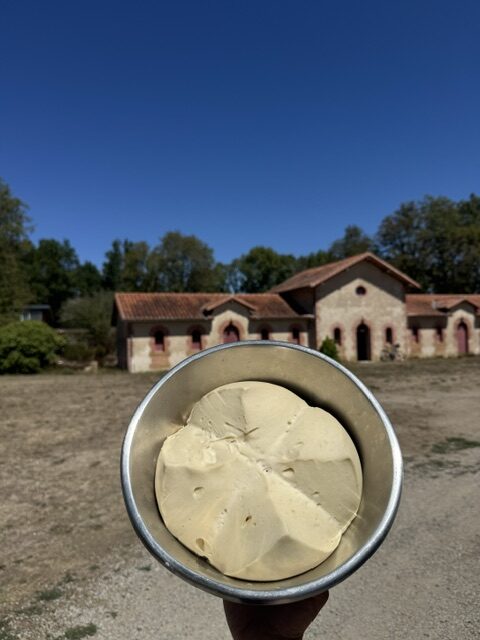
The evening before my trip to Boisbuchet, I realized that I had forgotten my sourdough starter, Luigi, which I always take with me when I travel. We had a heat wave, so returning to the bakery to get some Luigi was something I really didn’t want to do.
Also, I had no idea if I would actually find a fridge there to store Luigi, or if there would be any opportunity to use it. But I decided to do it anyway, and in the worst-case scenario I would just end up with an over-fermented starter that I wouldn’t use.
So I returned to the bakery, took some starter, fed and refreshed it in a way that would help it survive the 30-degree heat, including in Paris, and started my 19-hour journey from Bratislava to Vienna, then to Paris, then Poitiers, and finally Boisbuchet.
Long story short, it was worth it.
Once at Boisbuchet, I immediately found out that it was possible to store Luigi in the kitchen fridge. Many thanks to Amy, the chef at Boisbuchet, who made it possible, and for all her help and patience with me.
At first, I wanted Luigi to become a part of my installation, but then decided that it would be too obvious and that I should go out of my comfort zone. But Luigi still found his way into Boisbuchet, because Frida and Wagner suggested that maybe I should bake something for the tablescaping for the final dinner on Friday.
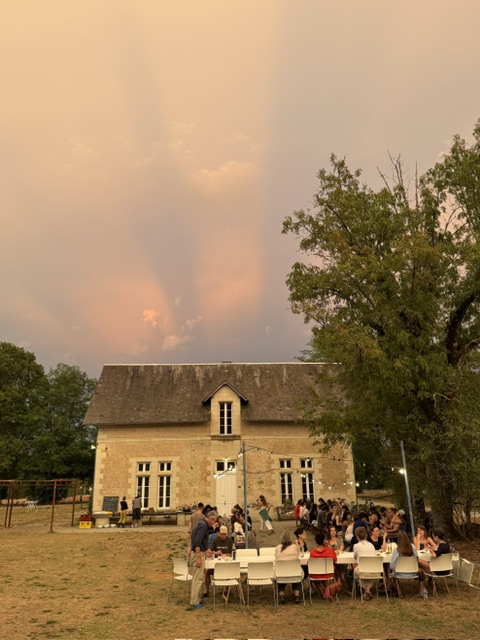
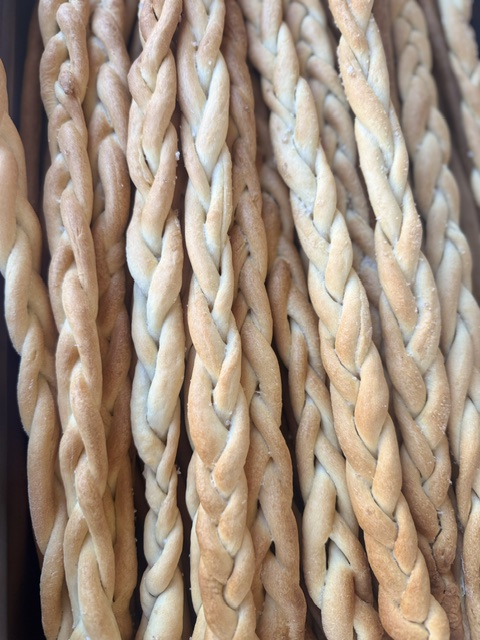
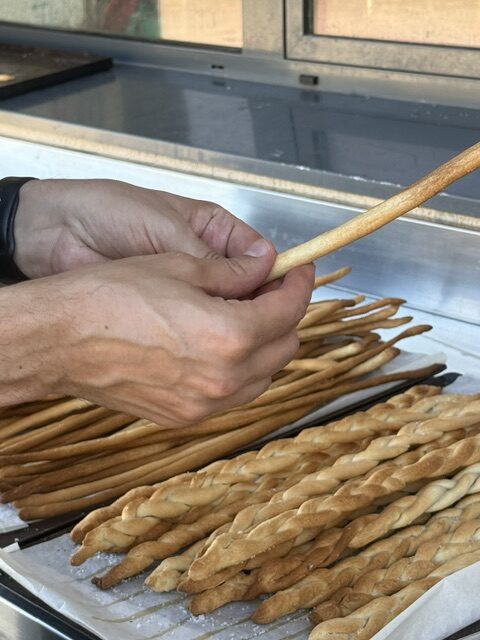
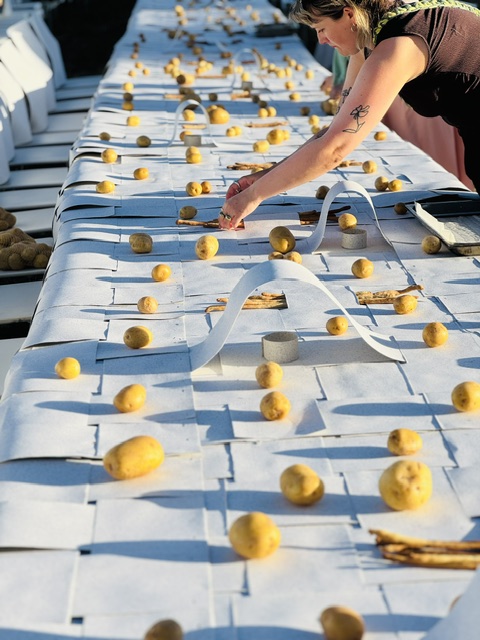
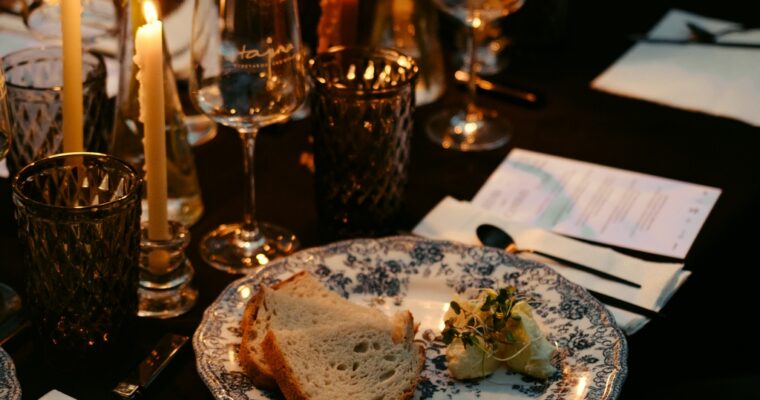
Baking for a tablescape by two of my personal icons in floristry is living my best sourdough life. So of course I agreed, and with the help of my beautiful classmates baked over 300 grissini that became part of an immense dinner table, alongside a tablecloth made of seaweed paper, potatoes and lighting.
And it was such a beautiful experience.
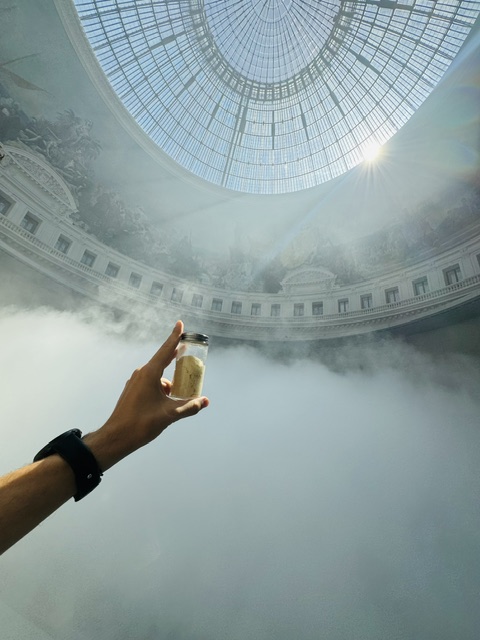
On our way back, Luigi and I also stopped in Paris to see Fujiko Nakaya’s fog sculpture at Bourse de Commerce. Another unexpected stop in the adventures of me and Luigi.
To end this story, here is the description of my installation, Awkward & Fragile, that I shared during the final presentation of our projects:
Awkward & Fragile
These three installations are my attempt not to think but to feel about the situation I experienced here at Boisbuchet, when our group was crossing the river holding hands.
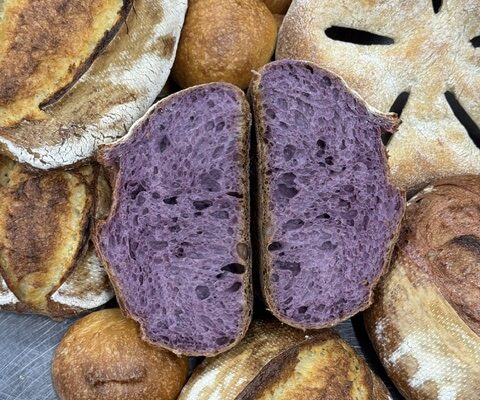
One of my personal goals this year is not only to push my own understanding of what bread baking can be beyond just water, flour and salt, but also to introduce a different aesthetic of bread to the people around me. This goal led me …
It’s only July, and this year has already taken Luigi and me to quite a few places. I’ve been baking abroad in London and Greece, and I’ve also had nine consulting sessions in six cities across Slovakia. Considering that Slovakia is a rather small country, …
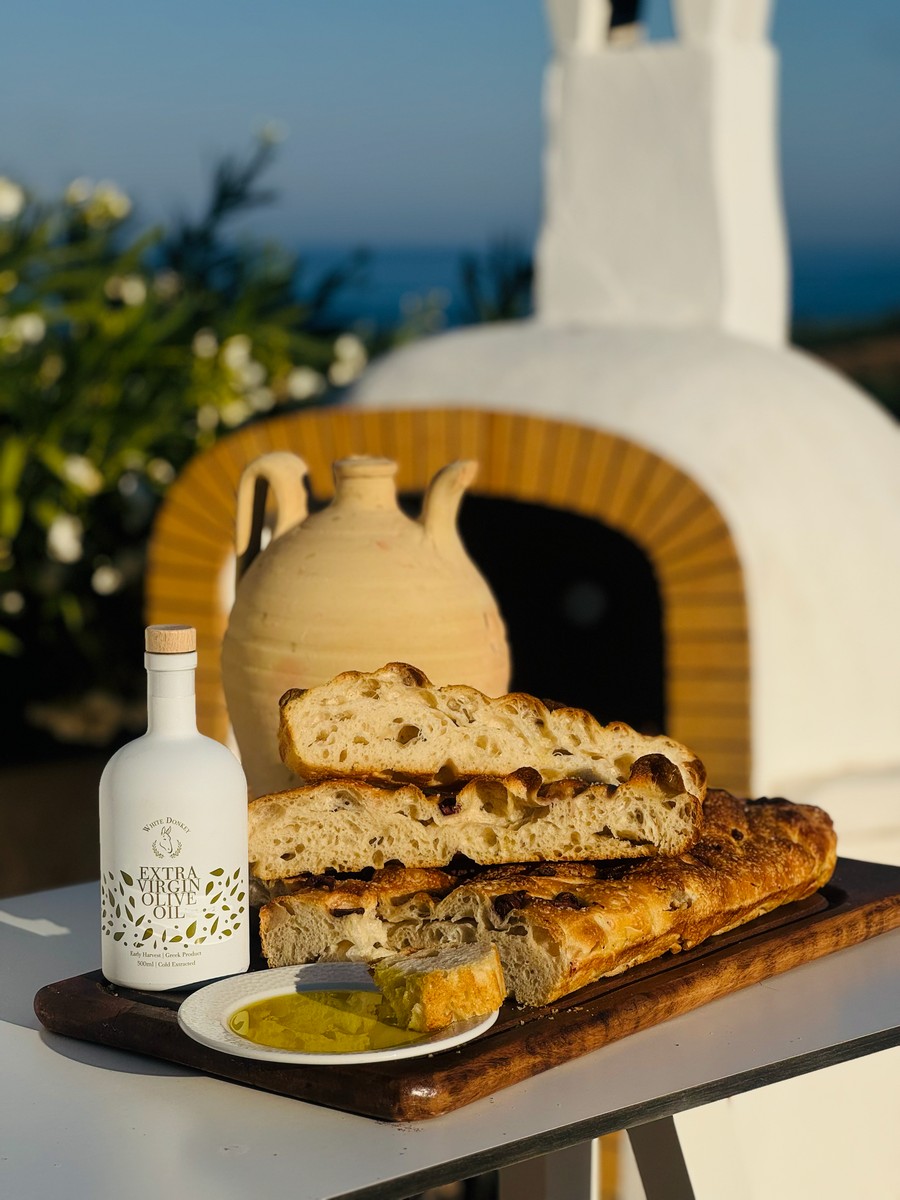
When last year the owner of the location where one of our bakery shops is located told me that he also owns White Donkey Boutique Hotel with an olive grove and produces his own olive oil, he offered a collaboration where I would come to visit and share my focaccia recipe with the hotel’s team. Baking focaccia with top quality olive oil in a boutique hotel located on a hill above the sea between old olive trees… okay, I’m all into it. We agreed to get in touch again in May or June to plan the trip.
My year 2026 is quite intense because of the number of international projects, baking consulting, and preparations for the opening of Bloom Bakery’s new venues, so I somehow forgot about this opportunity and remembered it only after Boris Gula, the owner, contacted me with a reminder that he would be glad to welcome me and my content creator Timofej in two weeks. Considering the number of events in my schedule, planning something just two weeks in advance takes a lot of courage, so I moved my long planned hiking trip and bought tickets to Kalamata.
It was my first time in Greece, and I loved it from the first sight. Everything was so green and beautiful, in contrast to the burned landscapes of southern Italy that I used to visit often and naturally compared with this southern location. The country seemed to be very relaxed and old school in a good, nostalgic way, which I can’t stand in my daily life but always enjoy when experiencing it in foreign countries. Such a contrast.
White Donkey Boutique Hotel itself was an amazing combination of quiet luxury and vibrant life: yoga lessons in the morning, an infinity pool overlooking the bay, and, of course, two donkeys that were surprisingly not white.
Georgia, the hotel’s manager, when I introduced her to Luigi, my sourdough starter that I was supposed to use in their kitchen, told me that her mother also bakes sourdough bread with a starter that is a few decades old and that she would gladly share some with me so I could mix it with Luigi. I politely declined the offer, telling her the truth: I prefer not to mix my starter with others. I later made an exception, but we’ll return to this story a bit later.
So I fed the starter with the soft, weak flour that was available in the kitchen and made a short trip to a nearby supermarket, where I discovered strong Italian Caputo pizza flour that was good enough for my baking goals.
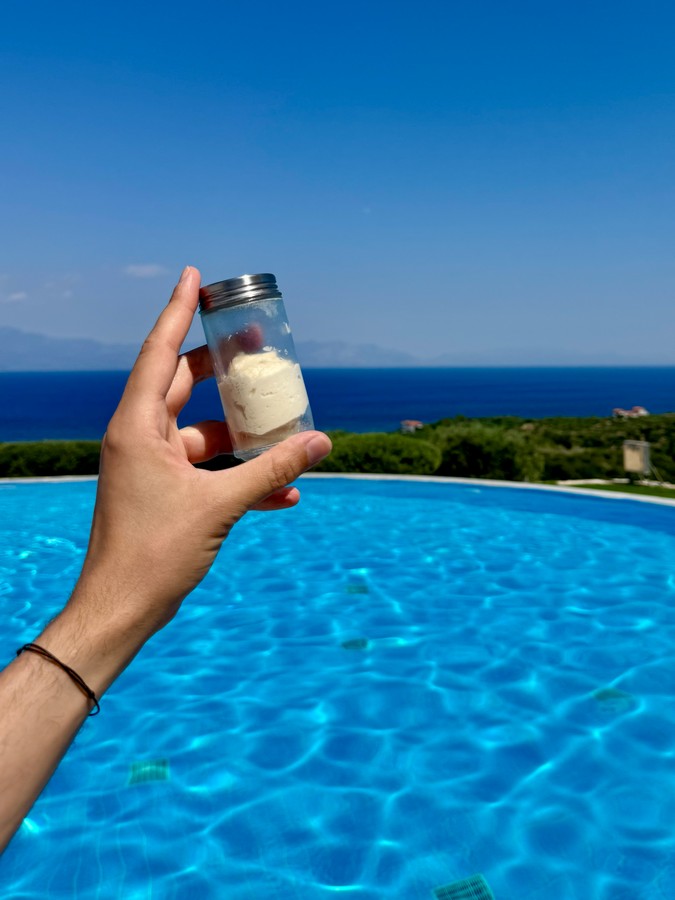
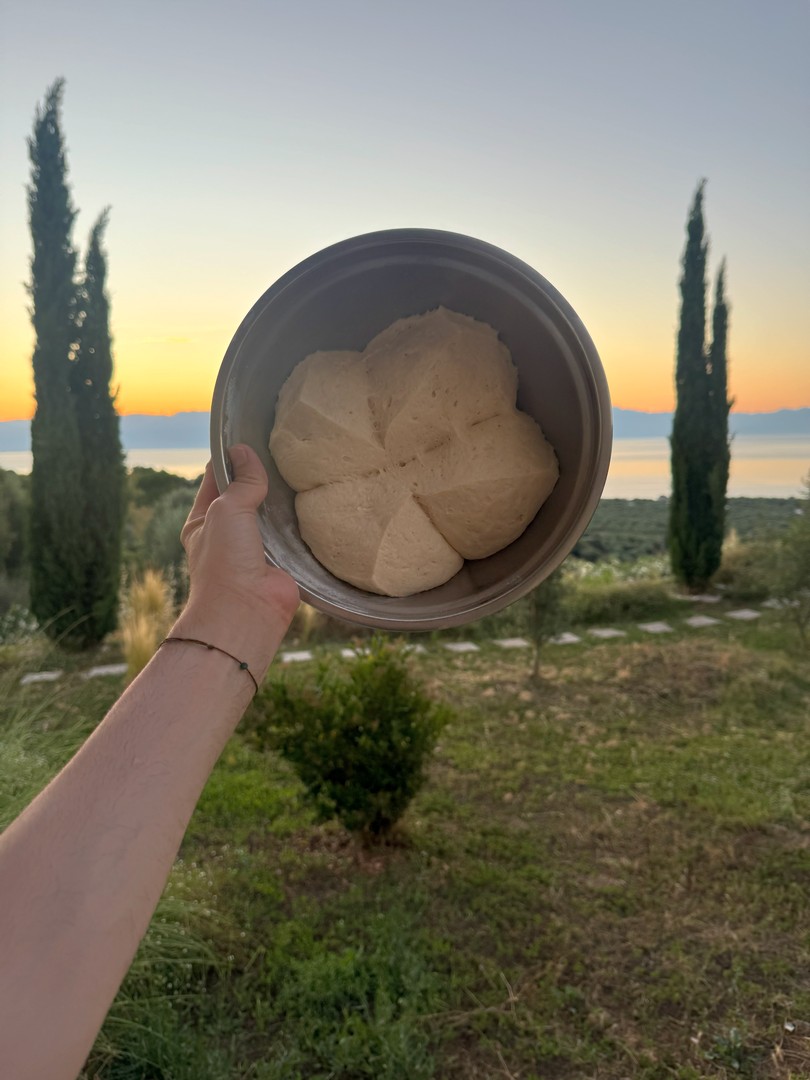
I refreshed Luigi in the evening, starting with just 70 g of starter, 1 kg of flour, and 500 g of water, hoping to have it ready by the morning so I could make the dough. I decided to take the bowl with the starter to my room, just to make sure it wouldn’t over-ripen overnight, so I could cool it down a bit if necessary. The southern night was warm, the flour was weak and rich in carbohydrates, and so the bugs inside Luigi had an intense feast, making it almost ready around 6 a.m.
Baking in other kitchens is always challenging. I was doing my best not to interrupt the kitchen staff, who were preparing breakfast, too much while also trying to knead the dough in conditions that were not very familiar.
The tap water I used was too warm for my goals, so I needed to use ice cubes to cool it down. The mixer, or as they say in Greece, megalo machina, was working relatively well, but the oven gave me a surprise: the real temperature was about 40°C higher than what I had set. Also, whenever the temperature exceeded 260°C, the safety switch turned the oven off. So when I set it to 250°C, I was actually getting almost 290°C, which caused it to shut down and required a slightly tricky restart. The fridge I had expected to use for the dough’s cold retardation was set to 4°C and, as you may expect, that put me at risk of ending up with underproofed dough.
Somehow, everything worked just fine. I used iced water, the dough proofed longer at room temperature, the chilled dough was then left for two hours to get ready for baking, and the oven was set to 210°C which, together with the extra 40°C, gave me the 250°C I needed to bake the focaccia.
While the dough was proofing, I even managed to swim at the nearby beach. It was wonderful, with crystal clear water and mountain peaks in the background.
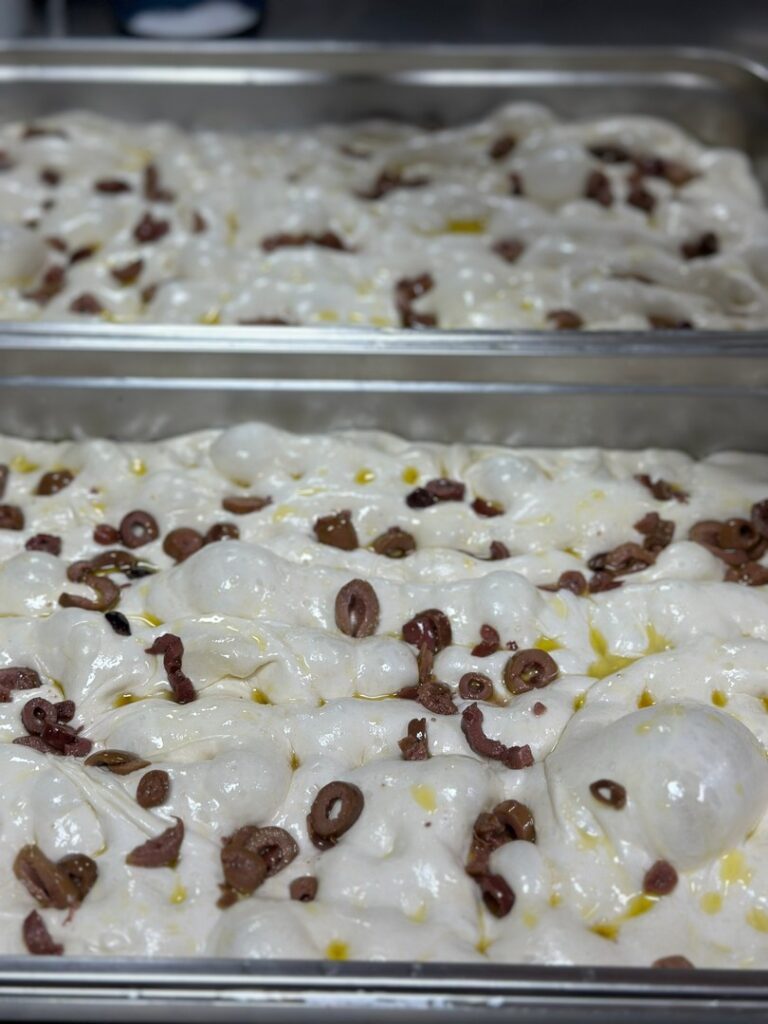
The focaccia was topped with a generous amount of the finest Kalamata olives. Using Kalamata olives in Kalamata… wow, I’m living my best baking life. And, of course, it was finished with the hotel’s own olive oil.
Everything was scheduled so that the focaccia would come out of the oven fresh for the dinner service at the hotel, which starts at 7 p.m. To my pleasure, the guests enjoyed it. I noticed focaccia on most of the tables.
When we discussed the recipe with the kitchen team, I suggested sacrificing some openness of the crumb by reducing the number of stretch and folds. That way, the process would be easier to fit into an already busy kitchen.
Now, about Georgia and her mother’s starter. She brought me a sample the next day, and I did something I didn’t expect: I mixed it with Luigi.
Here, I should make a statement. As a baker and technologist, I do realise that all the little magic I do with Luigi, like travelling with a living culture and always bringing it back to our bakery so we can continue baking with it, doesn’t significantly influence the bread itself. But it’s a beautiful story.
And I love stories.
Actually, it was not a starter. It was rather pâte fermentée, or old dough.
Georgia’s mother, with the gorgeous Greek name Eleftheria (which means freedom), received a piece of old whole grain dough many years ago. She keeps this dough in the fridge for a week, then adds a pinch of baker’s yeast, lets it rise, takes a portion for the next bake, puts it back into the fridge, and repeats this cycle. She has been doing this for around 50 years.
It’s not a starter, so I added 50 grams of this old dough when I refreshed Luigi at the hotel before going back to Bratislava. I also took a small piece with me to add to the “mother” colony in our production. So now Luigi is enriched with a few Greek yeast cells and this beautiful story.
I loved this little baking project. I’m very grateful to have been invited and hope that Luigi and my focaccia recipe will make the guests and team at White Donkey Boutique Hotel happy.
Today’s story is about what’s known as the sacred trio of nutrition: prebiotics, probiotics and postbiotics and their connection to sourdough bread. This topic makes me super excited as it once again shows how meaningful sourdough baking can be, and uncovers new horizons that were …
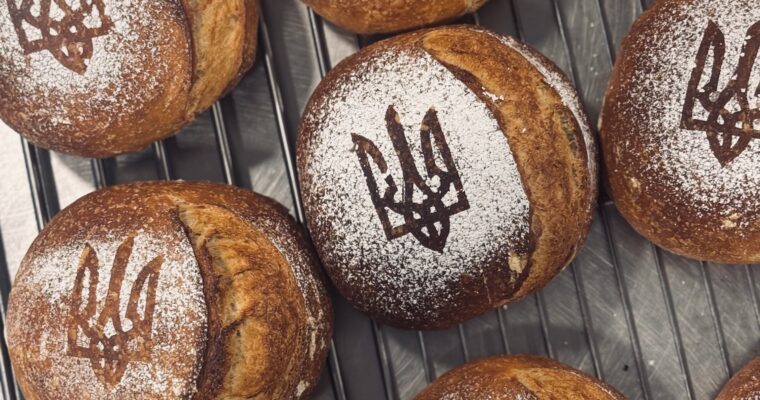
I have baked this bread many times at Bloom Bakery and also presented it during courses with Jana Balažová in Zvolen. It has always been well received.Its visual character comes primarily from the scoring, inspired by the work of the British baker Wayne Caddy. I …
No-knead bread with 1% starter is perfect for those who do not have time to work the dough intensively but still want to bake sourdough bread regularly. This bread requires only very brief mixing, just enough to combine all ingredients, followed by a long fermentation.
Introductory Notes 🙂
As you will see, there is nothing complicated about this recipe. However, I want to emphasize that the key to success is using a vital, fully active starter at its peak. Only a few grams of starter go into the dough, so it is essential that even this small amount is strong enough to do its job.
As you probably know, gluten can be developed either mechanically or over time. In this recipe, we rely solely on time. The dough is not kneaded at all, neither by hand nor with a mixer. To prevent over-fermentation during gluten development, we use only a very small amount of starter, giving forcing the dough to ferment slowly and gently.
Ingredients
400 g wheat bread flour (for example T650 or Aidy)
100 g whole wheat flour
340 g water (those experienced with high hydration doughs may add more water)
5 g mature stiff starter (Lievito Madre) (rye sourdough or liquid wheat starter can also be used)
10 g salt
Method
Add the water to a bowl and dissolve the starter in it by rubbing it between your fingers. Mix well. Add the flour and salt and mix only until everything is evenly combined.
Cover the bowl and let the dough rest for 12–13 hours at room temperature (23–24 °C). Do not stretch or fold the dough 🙂 The time is indicative. The dough should visibly rise but not excessively. Using a transparent container helps to observe bubble formation.
With wet hands, gently transfer the dough onto a floured work surface and shape it into a round. Let it rest for 10 minutes to relax the gluten. Then shape it into an oval loaf and place it seam-side up into a proofing basket.
Proof in the basket for approximately 3 hours. I personally prefer not to score very warm dough, so while preheating the oven, I place the basket into the refrigerator to slightly firm up the dough.
Bake the 1% starter bread using a classic method: 20 minutes with steam at 250 °C, then an additional 20 minutes at 210 °C. Let the baked bread cool completely on a wire rack.
I must say this recipe surprised me three times: with its unconventional method, its excellent flavor, and its beautiful crumb.
Hello and welcome to Sourdough and stories beyond I am your host Mykola Nevrev, sourdough expert, cookbook author and owner of The Midnight bakery, soon to be Bloom bakery in Bratislava, Slovakia In each episode of this podcast, I am going to share a story …